Research

Contribution to Science

Research Contributions

The Chen Laboratory focuses on protein degradation pathways, tumor protein quality control and translational strategies for cancer intervention.

01

Develop platforms for targeted degradation of cell surface proteins and discovery of novel chimeric drugs

Membrane-associated proteins constitute a crucial class of drug targets implicated in diverse disease pathologies, especially cancer. We established a novel integrin-facilitated lysosomal degradation (IFLD) strategy to degrade extracellular and cell membrane proteins using bifunctional compounds as molecular degraders, which exhibited significant tumor suppression effects with low side effects in mouse models (J. Am. Chem. Soc., 2022).

Consisting of small molecules and biocompatible cell-penetrating peptides, CPP-mediated lysosome-targeting chimeras (CPPTACs) provide an effective approach for selectively degrading cell surface proteins, including PD-L1, CAIX and CB2R, in various cellular contexts (Nat Commun; JBC, 2025). Together, these novel TPD-based approaches have great potential for applications in cancer biology research and therapeutic intervention.
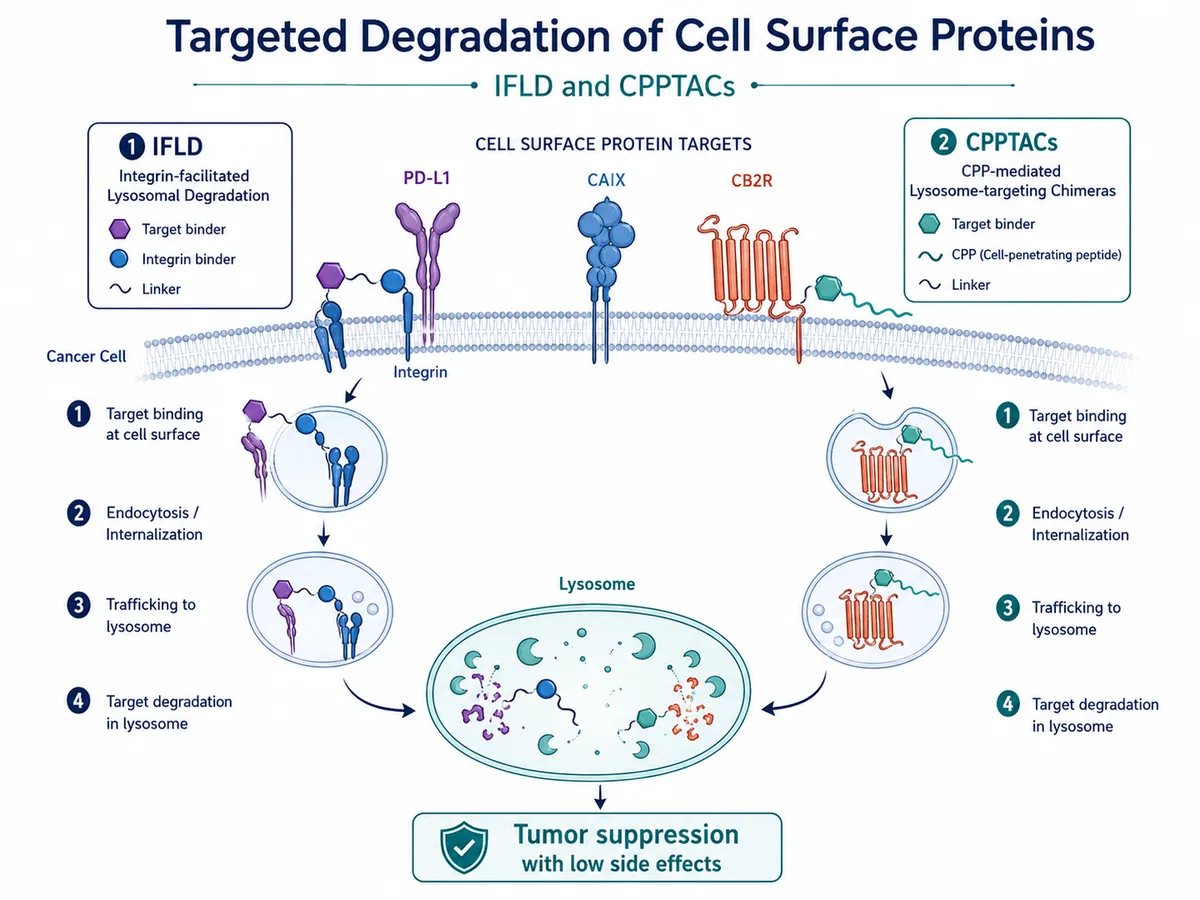
Schematic of targeted degradation of cell surface proteins through IFLD and CPPTACs
Targeted degradation of cell surface proteins through IFLD and CPPTACs.
02

Identify key regulators of tumor proteostasis under stress conditions

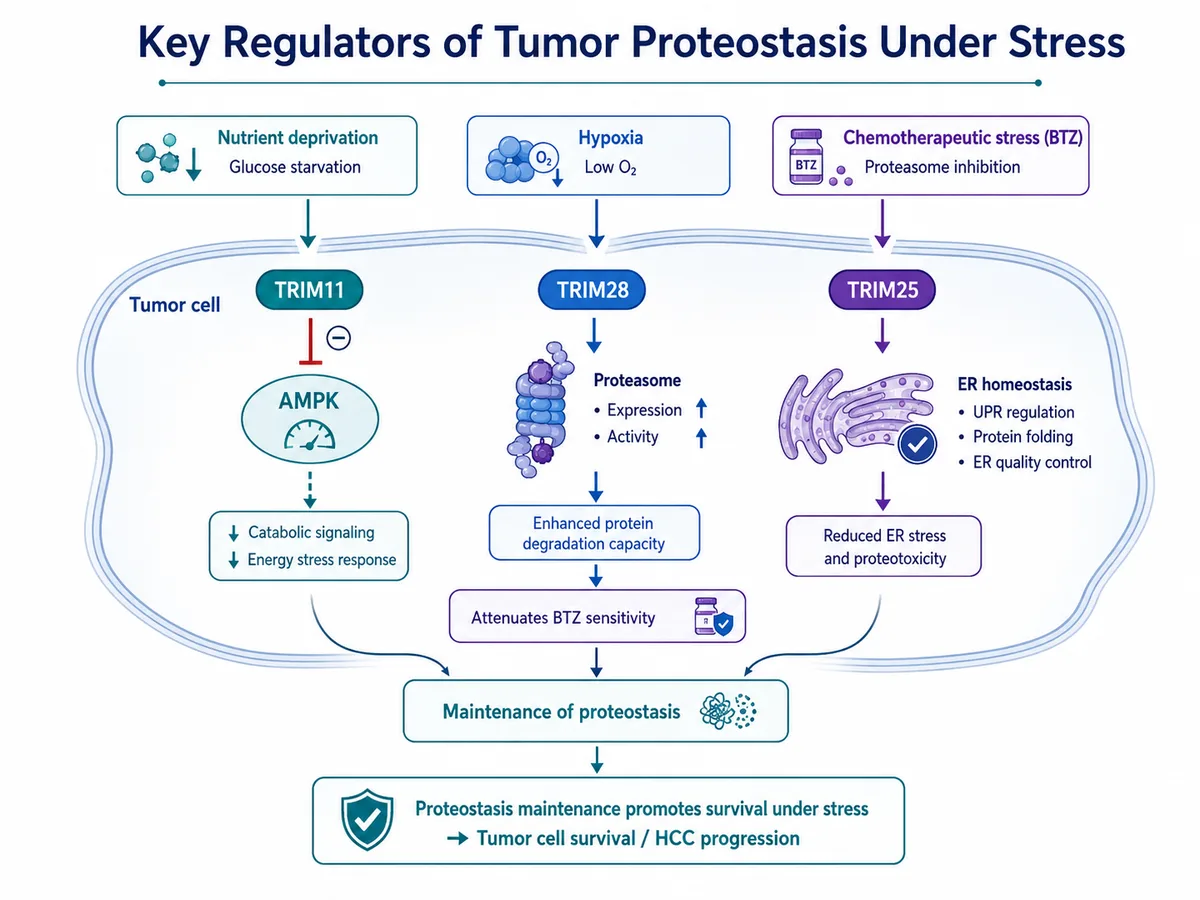
To counteract detrimental stresses, such as nutrient deprivation, hypoxia and exposure to chemotherapeutic agents, tumor cells evolve adaptive mechanisms to maintain proteostasis and survive under stressful conditions.

We clarified that TRIM11 negatively regulates AMPK activity during glucose starvation and determined that TRIM28 acts as a novel activator of the proteasome, suggesting that TRIM11 and TRIM28 are crucial for HCC progression under metabolic stress or bortezomib treatment (Clin Transl Med, 2021/2022). We also revealed TRIM25 as a regulator of ER homeostasis and a potential target for HCC therapy (Nat Commun, 2020).

Schematic of TRIM-family regulators controlling tumor proteostasis under stress
TRIM-family regulators coordinate tumor proteostasis under stress conditions.
03

Characterize the link between misfolded proteins and tumorigenesis

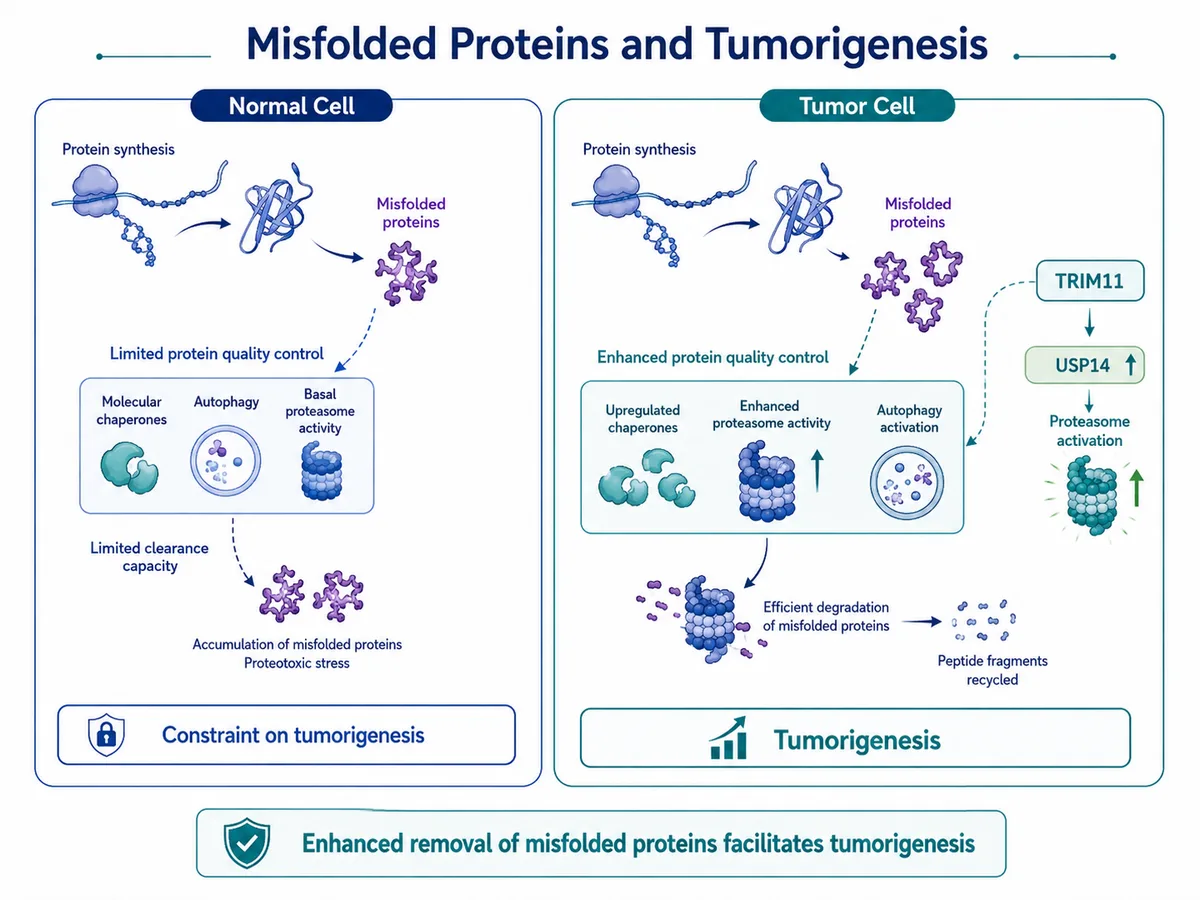
We provided the first evidence, to our knowledge, that enhanced removal of misfolded proteins is an intrinsic characteristic of tumor cells, and defined both its causes and consequences. We revealed limited cellular capacity to remove defective proteins as a normal constraint on tumorigenesis, which is overcome by many tumor cells.

We further identified mechanisms and consequences of this previously unrecognized trait of tumor cells (Cell Rep, 2017). Additionally, we first reported regulation of proteasome function by an E3 ubiquitin-protein ligase, extending ubiquitin-proteasome pathways and providing a major step forward in tumor proteostasis research (Nat Commun, 2018).

Comparison of misfolded protein handling in normal cells and tumor cells
Enhanced removal of misfolded proteins facilitates tumorigenesis.